Advantages
With Electric motor as prime mover
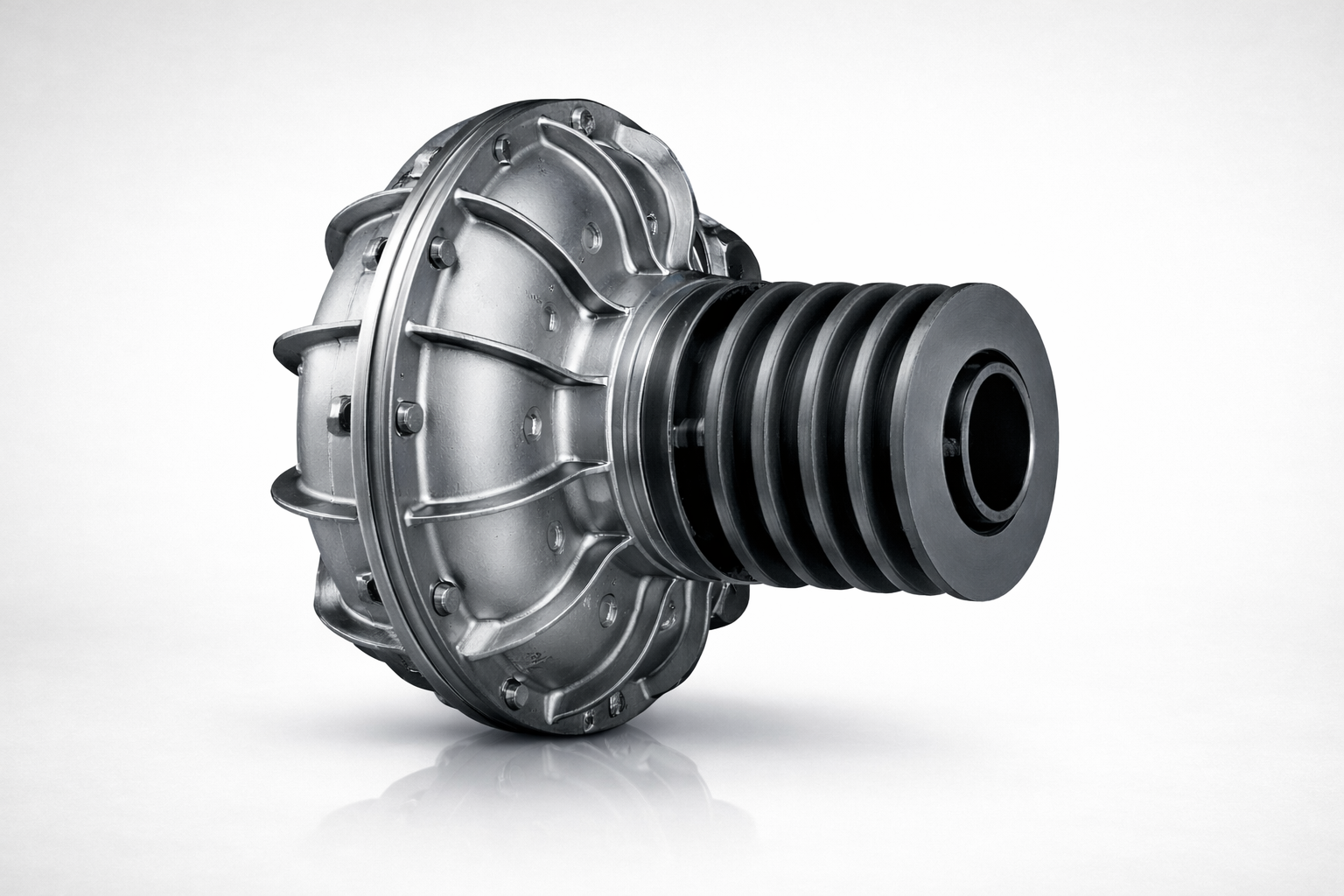
The motor starts free of load, accelerates towards max torque condition where the current demand is relatively low, the max torque that can be transmitted through fluid coupling does not exceeds 200%of nominal motor torque. Due to this, low priced squirrel cage motor can be used in place of a specially wound motor.
- Prevention of motor stalling and burning, even under sudden overload s.
- Frequent starts and breaking by reversal of the motor are possible.
- Since power transmission is through a medium of fluid, the shock loads are absorbed by fluid couplings.
With IC engine as prime mover
- The engine starts on no load condition
- Even under stall condition the engine continues to run, eliminating the chances of damage to the engine.